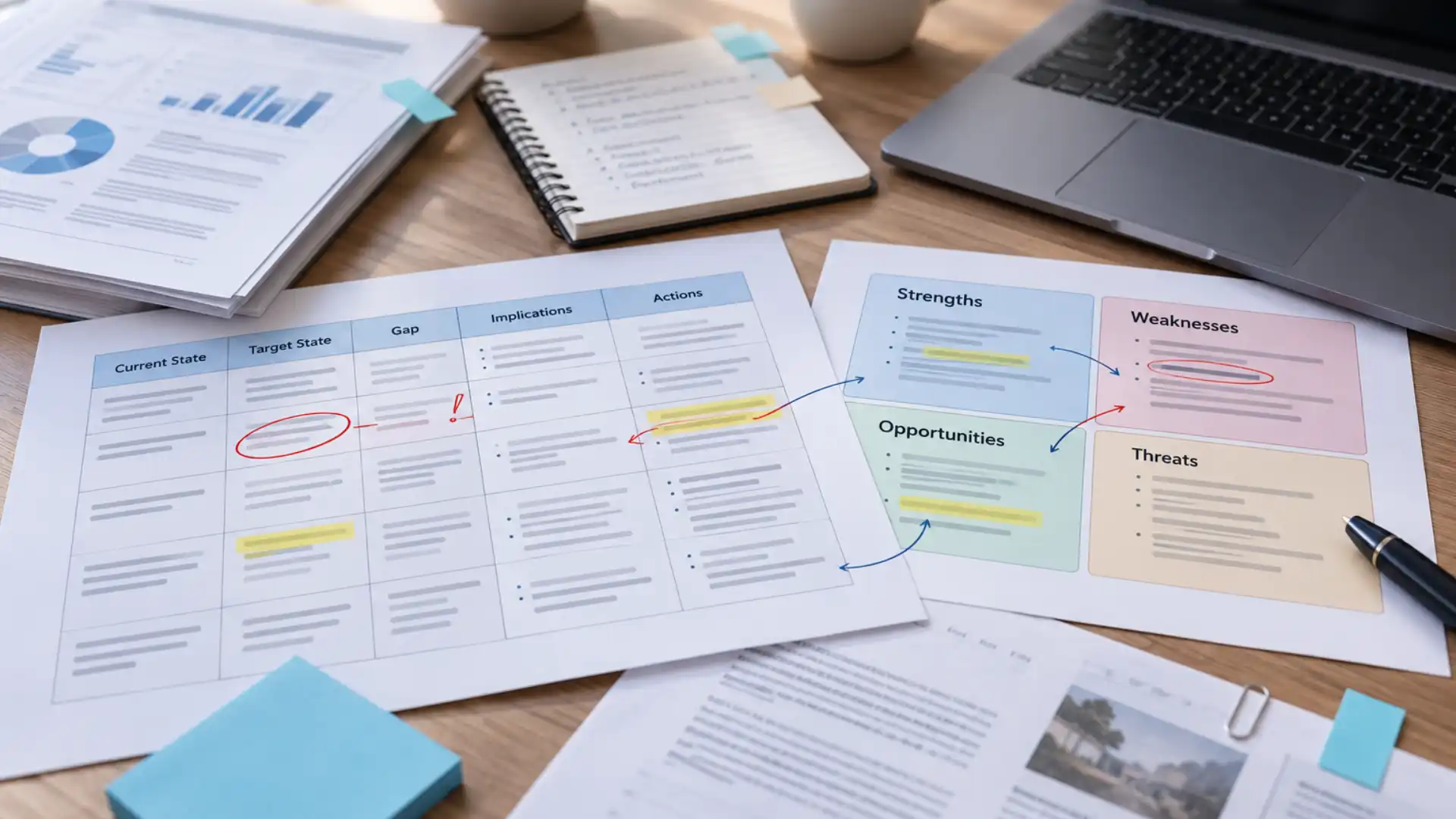

A solutions engineer rarely works one deal at a time — and the tools built for pre-sales work now split into two camps: ones that speed up a single task, and ones that carry deal context across the whole cycle. Here are seven worth knowing, organized around what each is actually good for.
AI tools built for pre-sales work are starting to close that gap, but not all of them close the same gap. Some are built to speed up a single task, like recording a call or drafting a proposal. Others are built to carry context across the whole deal cycle, so the fifth interaction with a prospect benefits from everything that happened in the first four. This guide reviews seven AI tools solutions engineers actually use, organized around what each one is actually good for, so you can match the tool to the part of your workflow that is genuinely slowing you down.
What to Look for in AI Tools for Solutions Engineers
Not every AI tool marketed to sales teams is built with SE workflows in mind. Before comparing specific products, it helps to know what actually matters for pre-sales work.
Context retention across sessions
A tool that forgets everything between calls forces you to re-explain the deal every time. Look for tools that carry account history, technical requirements, and stakeholder notes forward automatically.
Fit with your actual bottleneck
Demos, RFPs, discovery calls, and stakeholder alignment are different problems. A tool built for one rarely helps with the others — know which stage is costing you the most time before you shop.
Setup cost versus ongoing value
Some tools need weeks of template-building before they pay off; others are useful from day one. Neither is wrong, but the tradeoff should match your team’s bandwidth.
Integration with your existing stack
A tool that lives outside your CRM and demo environment adds a new place to check, not less friction. The best options fit into workflows you already have, covered in more depth in how solutions engineering teams structure their day-to-day workspace around a single source of deal truth.
The Best AI Tools for Solutions Engineers
1. Noumi — a shared workspace that holds deal context across the whole cycle
Noumi is a human-AI collaboration workspace built for people juggling many active projects at once, which maps closely onto how solutions engineers actually work: several deals in motion, each with its own technical requirements, stakeholders, and history. Rather than treating each session as a blank slate, Noumi is built around persistent memory, so context from a discovery call or a past proposal carries into the next task instead of getting lost.
- Organizes work by project and topic, so each account’s technical notes, past objections, and requirements stay attached to that deal
- Breaks down multi-step pre-sales tasks — like drafting a technical response or summarizing a discovery call — and works through them with less back-and-forth prompting
- Learns recurring patterns in how you work and builds reusable structure around them over time, instead of starting from a fresh template every time
- Helps confirm the actual scope of a task before running with it, which matters when a “quick summary” request actually means something more specific
Best for: SEs and pre-sales teams managing multiple concurrent deals who need one place that remembers account context instead of re-explaining it every session.
Limitation: as a newer entrant to the pre-sales space, Noumi’s integration list with legacy CRM and demo platforms is still growing, so heavily entrenched stacks may need a short transition period.
2. Consensus — automated, personalized demo videos at scale
Consensus is built around one specific bottleneck: the sheer number of product demos an SE team has to deliver. It automates the creation of interactive, personalized demo videos that prospects can watch on their own time, reducing how often an SE has to sit through a live walkthrough for every stakeholder on a buying committee.
- Builds a reusable video demo library that can be recombined for different personas or use cases
- Lets prospects self-serve through relevant product sections instead of waiting for a scheduled call
- Surfaces engagement data on which parts of a demo prospects actually watch
Best for: teams with high-volume, repeatable demo cycles where the same core product story gets told to many similar buyers.
Limitation: the upfront investment to build a strong video library is real, and the payoff is smaller for highly custom, one-off enterprise deals that rarely repeat.
3. Walnut — no-code interactive demo environments
Walnut focuses on letting SE teams build clickable, interactive product demos without needing engineering time or a live sandbox environment. It is aimed squarely at the demo-creation half of the SE job, letting teams stitch together a guided product experience that prospects can click through themselves.
- Builds interactive demo flows without requiring a working product environment
- Lets non-technical team members edit and personalize demo paths for specific accounts
- Supports branching demo paths for different buyer personas
Best for: teams that want more control and personalization over demo experiences without pulling engineering into every request.
Limitation: Walnut is a demo tool first — it does not help with RFP response, proposal drafting, or holding context between calls.
4. Gong — conversation intelligence for discovery and technical calls
Gong records, transcribes, and analyzes sales and pre-sales calls, surfacing patterns across a team’s conversations. For solutions engineers, that mostly shows up in discovery and technical scoping calls, where Gong can flag recurring technical objections or highlight moments a deal risk emerged that might otherwise go unnoticed until much later.
- Transcribes and analyzes calls to flag recurring objections or competitor mentions
- Gives managers visibility into how technical conversations are trending across a team’s pipeline
- Surfaces talk-time and engagement patterns that can indicate deal risk
Best for: larger SE teams where a manager needs visibility across many concurrent technical conversations, not just the SE running the call.
Limitation: Gong is built around analyzing conversations after the fact — it does not help with the written side of pre-sales work like proposals or RFP responses.
5. Loopio — structured RFP and questionnaire response
Loopio is purpose-built for one of the most time-consuming parts of the SE role: responding to formal RFPs and security questionnaires. It centers on a searchable library of past answers that can be pulled into new responses instead of being rewritten from scratch every time a similar question comes up.
- Maintains a searchable library of previously approved RFP and questionnaire answers
- Assigns and tracks sections of a response across multiple contributors
- Flags outdated answers so a stale response does not get reused by accident
Best for: teams that regularly field long, formal RFPs or security questionnaires with many overlapping questions across deals.
Limitation: the value scales with RFP volume — teams that only occasionally receive a proposal request may find the setup heavier than what they actually need.
6. Trumpet — digital sales rooms for multi-stakeholder deals
Trumpet builds shared digital spaces — sometimes called deal rooms — where an SE, the rest of the deal team, and the buyer’s stakeholders can all see the same resources, mutual action plan, and next steps in one place. It is aimed at the later, more political stage of a deal, when alignment across multiple buyer-side stakeholders becomes the main obstacle.
- Creates a shared hub with resources, timelines, and next steps visible to both sides of the deal
- Supports mutual action plans that track what each side has committed to
- Gives visibility into which stakeholders are actually engaging with shared materials
Best for: complex, multi-threaded deals where keeping several buyer-side stakeholders aligned is the main friction point.
Limitation: Trumpet is built for late-stage deal management, not for earlier discovery, demo prep, or RFP drafting.
7. Otter.ai — meeting transcription and notes
Otter.ai transcribes and summarizes meetings, which for SEs usually means discovery calls, technical scoping sessions, and internal deal reviews. It is a lighter-weight tool than most others on this list, focused entirely on capturing what was said rather than acting on it afterward.
- Transcribes and summarizes calls automatically, with searchable transcripts
- Highlights action items mentioned during a call
- Integrates with common video conferencing tools to join and record automatically
Best for: SEs who mainly need a reliable record of what was discussed on a call without adopting a broader pre-sales platform.
Limitation: Otter.ai captures conversations but does not carry that context forward into proposals, demos, or the next call the way a dedicated pre-sales workspace does.
How to Choose the Right Tool for Your Workflow
The right tool depends on which part of the SE workflow is actually eating your time, not which tool has the most features.
If you are a solo SE or lead a small team juggling many accounts at once and keep losing track of what happened on each one, a workspace like Noumi that holds deal context across sessions will save more time than any single-purpose tool. If demos are your biggest bottleneck because you are repeating the same walkthrough for every stakeholder, look at Consensus or Walnut depending on whether you want pre-recorded video or live interactive control. If your team runs a high volume of technical calls and a manager needs visibility into deal risk across the pipeline, Gong fits that need directly. Teams that field frequent formal RFPs or security questionnaires will get the most immediate return from Loopio’s structured answer library. If your deals routinely involve multiple stakeholders on the buyer’s side who need to stay aligned over weeks, Trumpet’s shared deal room addresses that specifically. And if all you need is a dependable record of what was said on a call, Otter.ai covers that without asking you to change how you work otherwise.
Most SE teams end up running more than one of these together — a context workspace alongside a demo tool or an RFP library is common — since each addresses a different stage of the deal rather than competing for the same job.
Frequently Asked Questions
Getting Started
Start by naming the one stage of your pre-sales cycle that is actually costing you the most hours each week — demo prep, RFP drafting, or losing track of deal context between calls — rather than trying to fix all three at once.
The tools above solve different problems, and running the right combination matters more than running the most tools. A dedicated demo builder or RFP library pays off fast once volume is high enough to justify it, but neither replaces the need for a place that remembers what happened on every account you touch.
If persistent context across every deal you’re juggling is the piece missing from your current stack, Noumi is built around exactly that problem. Try Noumi →