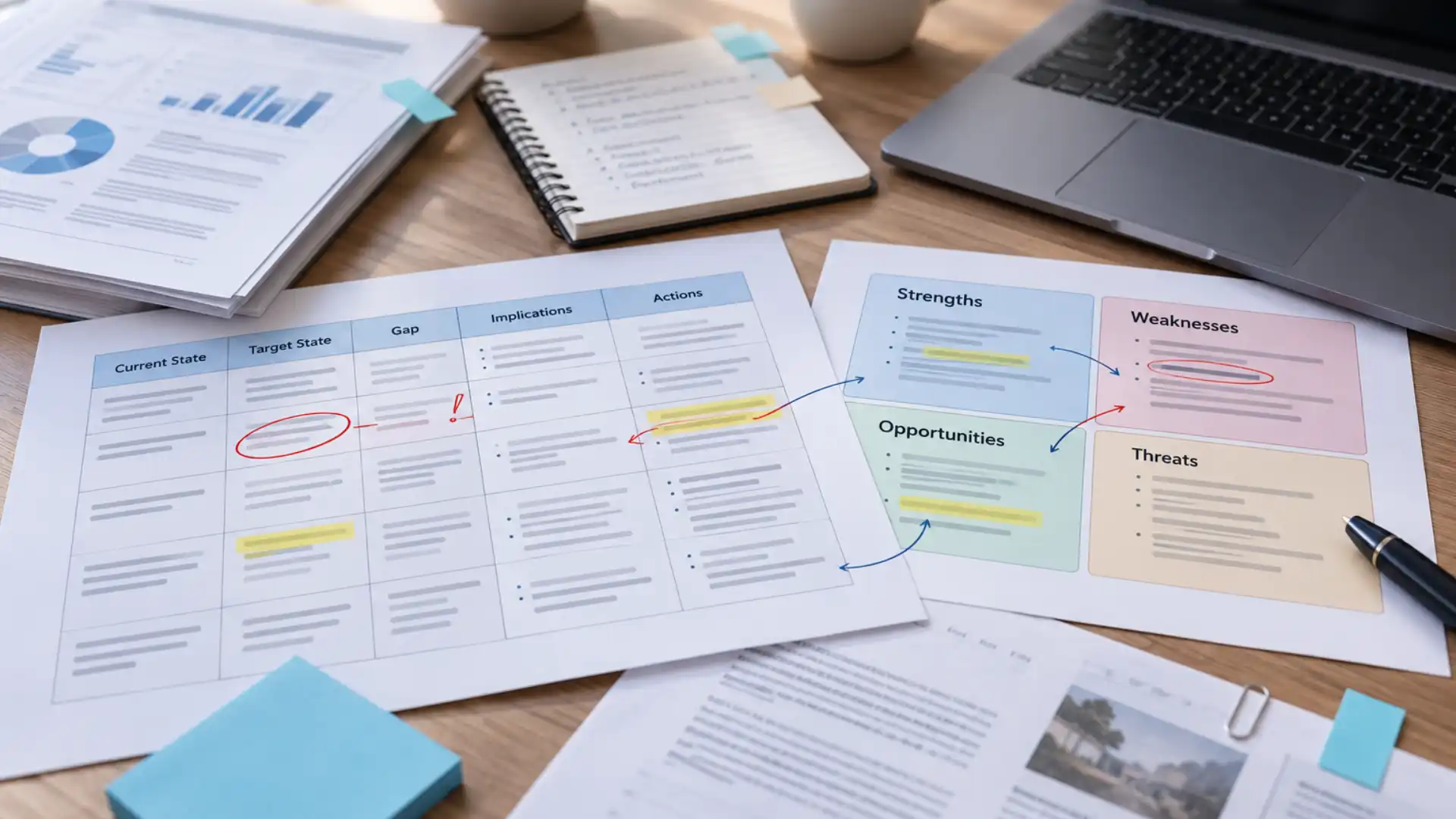

A proposal that wins is rarely the one with the most polished formatting. It’s the one that shows you understood what the client actually cares about — their constraints, their timeline, their underlying concern about whether this investment will hold up to scrutiny. Writing that kind of document at scale, across multiple active deals simultaneously, is where most proposal writers run out of bandwidth long before they run out of talent. An AI proposal generator can close part of that gap — but which part depends entirely on which tool you choose and what it’s actually built for.
AI has changed what’s possible here, but not uniformly. Some AI proposal generators speed up the mechanical parts of the work — filling in templates, generating boilerplate, formatting sections. Others genuinely change how you think through a proposal by holding context that would otherwise require rereading notes before every draft. This list covers both types. The seven tools below were selected based on four criteria: how well they handle customization for specific clients, whether they retain useful context between sessions, how much reformatting they require after output, and whether the writing they produce sounds like a real argument or a form letter.
1. Proposify — Best Dedicated Proposal Platform
Proposify is purpose-built for creating, sending, and tracking sales proposals. It combines a visual proposal editor with a managed content library, electronic signature support, and prospect engagement analytics that show when someone opened your document, how long they spent on each section, and whether they came back.
The AI features in Proposify focus on efficiency within the proposal workflow itself — generating or improving copy, suggesting approved content blocks from previous proposals, and flagging sections that tend to delay closing. For sales teams sending high volumes of proposals with consistent structure, it reduces the time between brief and send significantly.
Key Features
- Visual drag-and-drop proposal editor with industry-specific templates
- AI writing assistance for section copy, executive summaries, and value statements
- Managed content library for reusing pre-approved blocks across the team
- Built-in e-signatures with proposal tracking and notification alerts
- CRM integrations with Salesforce, HubSpot, and major sales platforms
Pricing
- Free 14-day trial available
- Team plan: from ~$49/month — core proposal features, e-signatures, analytics
- Business plan: custom pricing — advanced team controls and integrations
Best For
- Sales teams sending high volumes of templated proposals
- Organizations that need e-signature and deal tracking in a single workflow
- Teams that want analytics on how prospects engage with specific proposal sections
2. Noumi — Best for Context-Driven Proposal Drafting
Noumi is a human-AI collaboration workspace built around persistent memory and autonomous execution. Unlike tools that treat every session as a clean slate, Noumi retains context across all your projects — which matters considerably for proposal work, where the difference between a generic draft and a compelling document is how deeply you’ve absorbed what a specific client actually wants.
For proposal writers managing multiple active deals, Noumi holds the details that would otherwise require rereading notes before each draft: what the client emphasized in the initial discovery call, their technical constraints, the objections they raised, the budget signals from earlier conversations. When you’re ready to draft, that context is already present — not something you have to re-establish.
The platform’s persistent memory lets proposal sections be written to the specific client without manually re-injecting background information each time. Its autonomous execution handles multi-step work independently, so it can draft, structure, and refine a full proposal section without requiring step-by-step guidance. This is particularly valuable for solutions engineers and technical sales professionals who write highly customized proposals where generic content actively costs deals.
Key Features
- Persistent memory that retains client context across all sessions and projects
- Autonomous execution for drafting full proposal sections without constant guidance
- Self-evolving skills that learn your preferred proposal structure and tone over time
- Intelligent file search that surfaces relevant past proposals and research automatically
- Intent alignment to ensure output reflects what the client actually needs, not just what was literally asked
Pricing
- See noumi.ai/pricing for current plan details
Best For
- Consultants and sales engineers writing highly customized technical proposals
- Teams managing multiple active deals where each client has distinct context
- Proposal writers who need an AI that learns and adapts to their specific style over time
3. PandaDoc — Best for Proposal Automation and E-signatures
PandaDoc combines document creation, electronic signatures, and payment collection in one platform. Its AI features focus on accelerating proposal creation — generating first drafts from prompts, populating templates automatically with CRM data, and suggesting improvements to existing copy.
Where PandaDoc earns its place in proposal workflows is in what happens after the draft is written. Once a proposal is sent, the platform tracks every interaction, triggers follow-up reminders at the right time, and routes signed documents to the correct systems without manual handoffs. For teams with a consistent proposal process and defined client types, it removes a significant amount of administrative overhead from the close phase.
Key Features
- AI-assisted proposal drafting from prompts or existing templates
- Automatic data population from CRM integrations (Salesforce, HubSpot, Pipedrive)
- Built-in e-signatures, payment collection, and document tracking
- Real-time notifications when prospects open, view, or interact with a document
- Approval workflows for internal review before any document reaches a client
Pricing
- Free plan available (limited monthly documents)
- Essentials: from ~$19/user/month — core document and e-signature features
- Business: from ~$49/user/month — full automation, CRM sync, and team controls
Best For
- Sales teams with a standardized proposal process that benefits from automation
- Organizations where e-signatures and payment collection are part of the same workflow
- Teams that want CRM-integrated document generation with minimal manual data entry
4. Jasper — Best for Sales Copy and Persuasive Writing
Jasper is an AI writing assistant with consistent performance on persuasive, sales-oriented copy. For proposal writing, it’s most useful when you need to articulate value clearly — writing executive summaries, crafting benefit statements, tightening language in sections that feel flat after a first pass.
Jasper works well when you already know what you want to say but need help saying it with the right weight and structure. It’s less suited to proposals that require deep contextual knowledge about a specific client relationship, but for polishing language and building the persuasive narrative arc of a proposal, it produces strong output with less iteration than most general-purpose writing tools.
Key Features
- Templates for sales documents, executive summaries, and ROI-focused benefit statements
- Brand voice customization to keep proposal language consistent with company tone
- Long-form content generation with paragraph-level control over direction and emphasis
- Collaborative editing with team workspaces and comment functionality
- Integrations with Google Docs and Grammarly for seamless review workflows
Pricing
- Creator: from ~$39/month — 1 user, core AI writing features
- Pro: from ~$59/month — up to 5 users, expanded templates and brand voices
- Business: custom pricing — enterprise team controls and integrations
Best For
- Writers who need to sharpen persuasive copy and value proposition language
- Marketing and sales teams that want brand-consistent language across all client documents
- Freelancers producing proposals across multiple clients with varied industry contexts
5. Copy.ai — Best for Fast First Drafts
Copy.ai excels at generating first drafts quickly from a short brief. For proposal writing, it’s most useful in the early phase — when the goal is to get something structured on the page to edit, rather than producing a finished document.
Copy.ai’s workflow feature lets you chain prompts together, moving from a client brief through to a structured proposal outline with section headers and rough copy. The output requires meaningful editing before it’s ready to send, but it reliably shortens the distance between a blank page and a working first draft. For proposal writers who lose time staring at empty sections rather than refining strong ones, that’s often where the real friction is.
Key Features
- Fast first-draft generation from short brief inputs
- Workflow builder for chaining multi-step writing tasks from brief to draft
- 90+ content templates including formats relevant to sales and proposal writing
- Team workspaces with collaborative editing and version management
- Integrations with common CRMs and productivity tools
Pricing
- Free plan available with limited monthly credits
- Starter: from ~$36/month — individual use, core workflow features
- Advanced: from ~$186/month — team access, expanded workflow capabilities
Best For
- Freelancers who need to produce proposal drafts quickly across varied client types
- Salespeople who want a structured starting point to edit rather than writing from zero
- Teams testing AI-assisted proposal writing before committing to a purpose-built platform
6. Better Proposals — Best for Client-Facing Design
Better Proposals focuses on the presentation layer of the proposal: making documents look professional and immediately readable without requiring design resources. Its AI generates copy for proposal sections, but the primary differentiator is how the finished document looks when it lands in a client’s inbox — and how clearly it guides them through the case you’re making.
For industries where visual presentation influences how seriously a proposal is received — creative agencies, consulting firms, event companies, independent service providers — Better Proposals makes it straightforward to match document quality to the quality of the underlying work. It also tracks how prospects engage with each page, which creates useful signal for follow-up conversations.
Key Features
- High-quality, design-ready templates organized by industry and proposal type
- AI copy generation for individual proposal sections and value statements
- Page-level engagement analytics showing where prospects spend time or drop off
- Built-in e-signatures, live chat, and direct payment collection through the proposal
- Stripe and PayPal integrations for collecting payment without leaving the document
Pricing
- Starter: from ~$19/month — up to 5 proposals per month, core features
- Premium: from ~$49/month — unlimited proposals, advanced analytics, integrations
- Enterprise: custom pricing — dedicated support, custom domains, team controls
Best For
- Creative agencies and consultancies where visual presentation affects client perception
- Freelancers who want polished, professional documents without a dedicated designer
- Service businesses that want to collect a deposit or payment directly through the proposal
7. Loopio — Best for RFP and Tender Responses
Loopio is built specifically for responding to RFPs, RFIs, and security questionnaires — a distinct category of proposal writing with its own set of challenges. The platform maintains a searchable library of pre-approved answers, uses AI to match incoming questions to the most relevant existing responses, and manages the review and approval workflow before any content reaches the client.
For organizations that regularly respond to formal procurement processes, Loopio eliminates much of the repetitive work: locating the right existing answer, routing it to the appropriate subject matter expert for review, and assembling the final document to spec. It’s a specialized tool that isn’t the right fit for standard sales proposals — but for RFP-heavy enterprise sales teams, it addresses a workflow problem that nothing else does as well.
Key Features
- AI-powered question-to-content matching across an approved response library
- Automated suggestions from past winning proposals for incoming RFP questions
- Structured review and approval workflows before external submission
- Analytics on content usage, win rates, and response times by proposal type
- Integrations with Salesforce and major enterprise procurement tools
Pricing
- Custom and enterprise pricing — contact sales for a quote
Best For
- Enterprise sales teams responding regularly to formal RFPs, RFIs, and tenders
- Organizations with large libraries of approved proposal content requiring ongoing maintenance
- Teams that need structured internal review and compliance sign-off before submission
Common Mistakes When Choosing AI for Proposal Writing
Treating All AI Writing Tools as Interchangeable
A tool built for social media captions and a tool built for multi-section business proposals require very different capabilities. The key distinction is whether the tool can hold and apply contextual knowledge across a complex document — not just generate fluent sentences on demand. Output quality diverges significantly once you move beyond simple copy tasks into proposal sections that require understanding a specific client’s situation.
Expecting AI to Replace Proposal Strategy
AI accelerates writing; it doesn’t substitute for knowing what the client actually needs or how to position your solution against their alternatives and objections. The best proposal writing tools surface relevant context and remove friction — they don’t replace the judgment that makes a proposal worth sending.
Ignoring the Context Retention Problem
Most AI tools start fresh every session. For proposals that require deep knowledge of a specific client relationship — their technical environment, their buying process, their history with your company — a tool that retains context across conversations produces materially different output than one that requires you to re-establish that background every time you sit down to write. The retention gap compounds across a large pipeline.
Over-Optimizing for Design When Copy Is the Real Bottleneck
Visually polished proposals with weak value articulation don’t close deals. For most organizations, the bottleneck is writing a compelling case that addresses what a specific buyer actually cares about — not making the document look good. It’s worth diagnosing which problem you’re actually trying to solve before choosing a tool.
Frequently Asked Questions
Getting Started
Start by identifying where the actual friction lives in your proposal workflow. If you’re losing time on formatting, signature collection, and follow-up logistics, a purpose-built platform like Proposify or PandaDoc will eliminate most of that overhead. If the bottleneck is writing — specifically, the gap between what you know about a client and what ends up on the page — that’s a different problem with a different solution.
The tools in this list solve different parts of the proposal writing problem. For high-volume, process-driven proposal teams, the workflow automation of a dedicated platform handles most of what you need. For consultants, solutions engineers, and anyone writing deals where the quality of the proposal directly reflects the depth of the relationship, the ability to retain and apply client-specific context is what separates adequate output from output that actually moves deals forward.
If context retention is what’s missing from your current workflow, that’s exactly the problem Noumi was built to solve. Try Noumi →