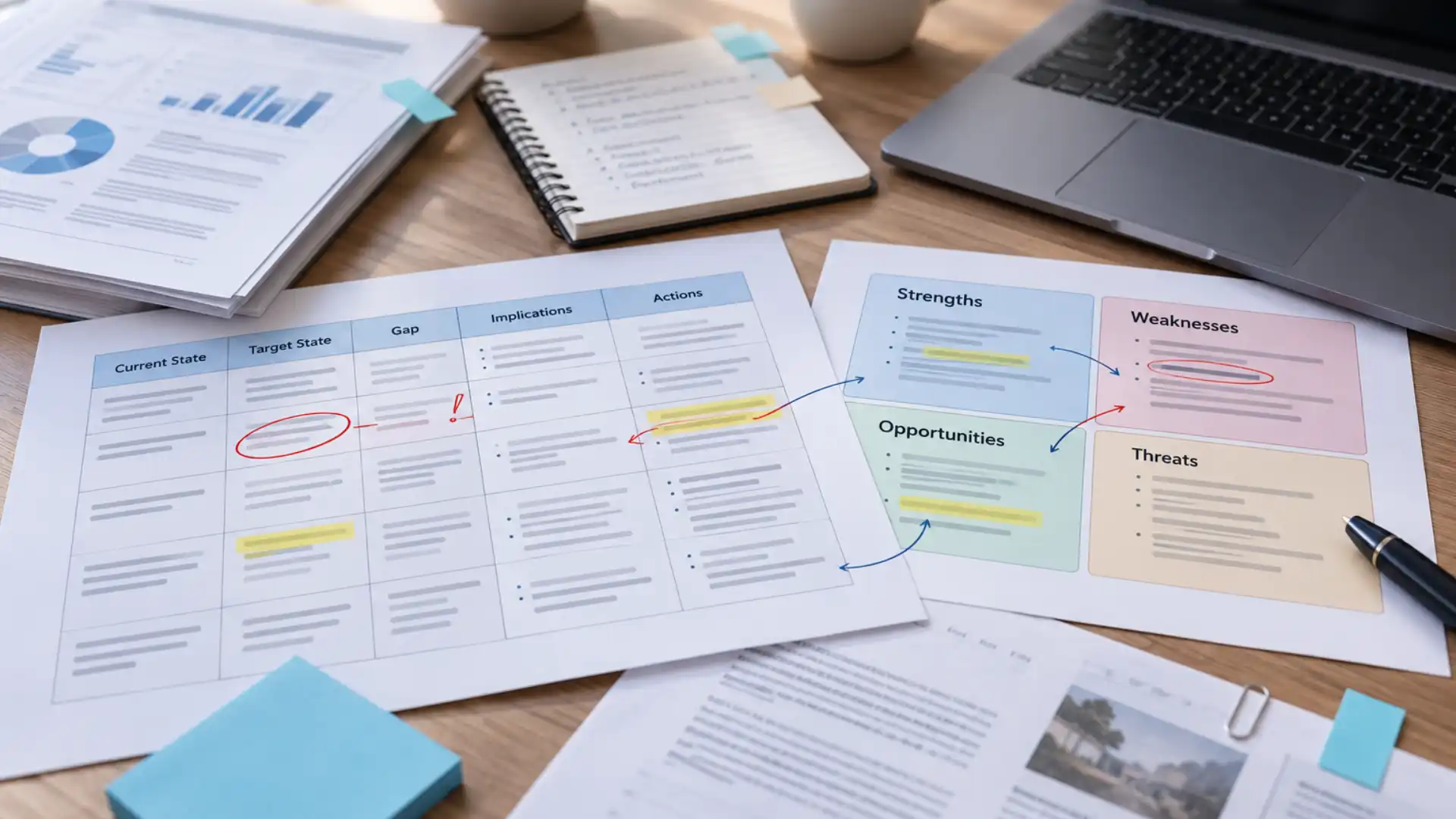

An account manager sends a client proposal — drafted in twenty minutes with AI help. Fast, structured, polished. The client responds: this doesn't reflect anything we discussed last week. The AI had no record of that call. This is not a story about AI being bad at writing. It's a story about what happens when you remove the human from the loop too early.
The phrase “human-in-the-loop AI” gets thrown around as a compliance term — something enterprises say when they want to sound responsible about automation. But it’s actually a design principle with real consequences for whether AI makes teams faster or just shifts the point of failure. This article explains what the principle really means, where purely autonomous AI breaks down, and how to design human-AI collaboration that holds up under real business conditions.
Human-in-the-Loop AI Is Not a Brake — It’s a Design Choice
The common misunderstanding is that human-in-the-loop (HITL) means slowing AI down. An approval button before every action. A human checkpoint that negates the speed advantage. Under that framing, HITL is a concession — something you add when you can’t fully trust the system.
The actual definition is more precise: human-in-the-loop AI is a system architecture where human judgment is embedded at structurally important points in the workflow, not bolted on as an afterthought or removed to save time.
The key phrase is “structurally important points.” Not every decision needs a human. Formatting a summary, pulling a meeting transcript, drafting a first-pass email — these are mechanical steps where full automation is both safe and appropriate. But context alignment before a client deliverable, priority calls when scope conflicts with deadline, judgment about tone when a relationship is fragile — these are the moments where removing the human doesn’t make the system faster. It makes it wrong.
Human-in-the-loop AI, done well, is about knowing the difference.
Why Full Autonomy Breaks Down in Business Workflows
The pitch for fully autonomous AI is appealing: less back-and-forth, more output, AI that just handles things. In controlled, well-defined tasks, it delivers on that promise. But most knowledge work — the kind that happens in real businesses — isn’t controlled or well-defined. The gaps show up in predictable ways:
- Context lives outside the conversation. A strategy call, a client preference, a constraint the CEO mentioned in passing — this information shapes every downstream decision, but it rarely makes it into the prompt. Autonomous AI works from what it was given, not from what actually matters.
- Business decisions involve unstated priorities. Which client gets the better slot? Do we push back on this scope or absorb it? These calls require organizational context that no AI system currently holds — and most of the time, you don’t realize one was made until the output arrives.
- Errors compound silently. When AI operates end-to-end without checkpoints, a wrong assumption in step two shapes steps three through seven. By the time a human sees the output, unpicking the error takes longer than doing the task would have.
- Relationships don’t tolerate corrections well. Internally, a wrong draft gets edited. Externally — with clients, partners, investors — a wrong draft that goes out damages trust in ways no correction fully repairs.
- Novel situations have no good training signal. The more unusual the situation, the less likely a purely autonomous system has useful analogues. This is exactly when human judgment is most needed and least present.
None of this means AI shouldn’t handle large portions of the work. It means the handoff points matter enormously, and ignoring them is what creates the failures that erode trust in AI systems generally.
What Good Human-AI Collaboration Actually Looks Like
Consider Maya, a solutions engineer at a mid-sized B2B software company. Her team handles custom implementations for enterprise clients, which means every engagement involves negotiated scope, non-standard requirements, and relationship management alongside technical delivery.
In her first week using a human-AI collaboration workspace, Maya started feeding it raw material: implementation notes, client email threads, the specific constraints one client had mentioned about their procurement cycle. The AI didn’t immediately produce perfect output. But it also didn’t lose any of it.
By week three, when she sat down to draft a project status update for that client, she didn’t start from a blank page. The workspace surfaced the relevant context — the procurement constraint, the scope caveat from the kickoff call, the tone of the client’s last message. Maya reviewed it, corrected one detail from a more recent conversation, and approved the framing before the draft was assembled. The whole interaction took eight minutes instead of forty-five.
By month two, something more interesting had happened. Maya had stopped second-guessing what context to include when she started a task. She knew the system would surface what it had, she’d verify the pieces that needed her judgment, and the output would reflect both. She no longer felt like she was overseeing an AI — she felt like she was working with one.
The distinction matters. Oversight is adversarial friction. Collaboration is the human and the AI each contributing what the other can’t — context, judgment, and relationship knowledge from Maya; speed, consistency, and cross-document recall from the system. Neither replaced the other. Neither worked as well alone.
“But Won’t Constant Checkpoints Kill the Efficiency Gains?”
This objection makes sense on the surface. If humans have to approve every significant action, aren’t we back to humans doing the work with extra steps?
The objection is right about badly designed HITL systems — ones where checkpoints are scattered randomly, poorly timed, or require the human to reconstruct context they don’t have. Those systems do kill efficiency. But the objection misidentifies the cause. Three things make the difference between friction and fluency:
Checkpoint Timing Determines Cognitive Cost
A review before AI drafts a client-facing document takes thirty seconds and prevents a bad send. A review after the document has been formatted, addressed, and scheduled requires unpicking a completed workflow. Same human involvement, radically different cost. Well-designed HITL puts review at decision points, not output points.
Context Quality Determines Checkpoint Quality
If the human has to re-explain the situation from scratch to approve an action, the checkpoint is expensive. If the system surfaces the relevant context and asks for a specific judgment call, it takes seconds. The difference isn’t how much the human is involved — it’s how much the system has done to prepare the human before asking.
The Right Tasks Don’t Need Checkpoints At All
Calendar formatting, meeting summaries, first-draft outlines for internal documents — these don’t need human review before they happen. The efficiency gains are real; they just live in the mechanical portions of work, not the judgment portions. Conflating the two leads to either over-automating (risky) or over-reviewing (slow).
The goal isn’t fewer checkpoints. It’s checkpoints that cost almost nothing and catch almost everything.
How to Evaluate Whether a Human-AI Collaboration Setup Actually Works
The question that matters: After three months, has the system reduced the number of judgment calls you have to make — or just moved them to different points in the workflow?
Good human-in-the-loop AI doesn’t eliminate human judgment — it makes human judgment more effective by ensuring it’s applied at the right moments. Here’s how to evaluate whether a setup is achieving that:
Context Retention Across Sessions
Does the system remember what was decided last Tuesday, or do you re-establish context at the start of every task? Teams for whom context is tacit and relational — like solutions engineers managing long-term client relationships — feel the absence of this acutely. If every new task starts from zero, the collaboration isn’t compounding.
Checkpoint Quality, Not Quantity
Count how many times the system asks for human input per week, then ask whether each of those asks required your actual judgment or just your approval of something obvious. High-quality HITL minimizes the latter. If the system regularly asks for things it could have resolved itself, the design is wrong.
Error Detection Before, Not After
Track whether errors are caught during collaboration or after output is delivered. Good human-in-the-loop design creates natural moments for review that surface misalignments before they become problems. If you’re catching errors in the sent email rather than in the draft, the checkpoints are too late.
Adaptation Over Time
Does the system get better at knowing what to surface and what to handle independently? A static system that treats month six the same as week one isn’t learning from the collaboration. Good HITL systems narrow the gap between what the human needs to review and what they actually need to review — because the system has learned what their judgment patterns look like.
Choosing your setup: If your work involves one-off tasks with clear scope — summarizing a document, generating a standard report — full autonomy is often fine. If your work involves ongoing client relationships, complex context, and decisions where being wrong has real cost, human-in-the-loop isn’t optional. It’s the architecture that makes the collaboration sustainable.
Frequently Asked Questions
Getting Started
The first step to better human-AI collaboration isn’t adopting a new tool — it’s identifying where context is currently falling through the cracks. Pick one recurring task where the output sometimes misses the mark despite a decent brief. That gap is usually where the handoff point needs redesigning.
Most teams find that once they get the first handoff point right — context surfaced before action, judgment requested at the right moment — the pattern applies across their workflows. The leverage isn’t in doing more with AI; it’s in doing the right things with human judgment still in the loop.
If you’re designing how your team works with AI, Noumi is built around this principle from the ground up — a workspace where humans and AI share context, manage tasks together, and deliver results neither could produce alone. Try Noumi →