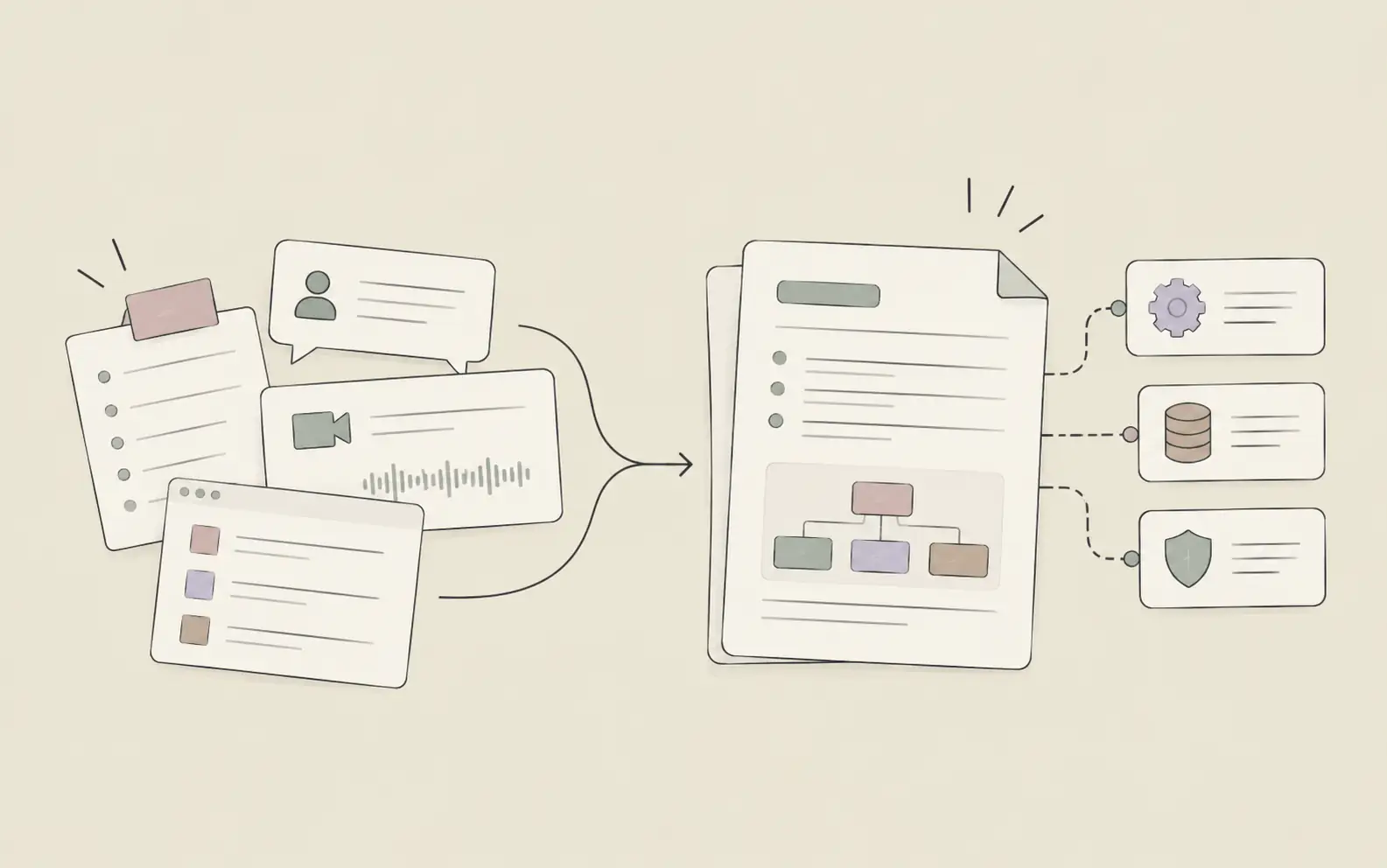

Claude Cowork remembers context within projects — but every time you establish a new workflow pattern, you configure it manually. Noumi automatically extracts reusable patterns from your work and builds custom skills over time. This comparison covers memory architecture, skill evolution, autonomous execution scope, and pricing across both platforms.
Quick Comparison: Noumi vs Claude Cowork
| Dimension | Noumi | Claude Cowork |
|---|---|---|
| Skill Evolution | ✅ Auto-learns from your work | ⚠️ Manual CLAUDE.md setup |
| Memory Architecture | ✅ Cross-project + workspace files | ⚠️ Project-scoped only |
| Autonomous Execution | ✅ Multi-step tasks across apps | ⚠️ Desktop file operations |
| Project Management | ✅ Project/Topic structure + GUI | ⚠️ Local folders only |
| Integration Ecosystem | ✅ Cross-platform (Jira, Slack, Drive) | ⚠️ Google Workspace, Notion, Asana, Box |
| Collaboration | ✅ Multi-user workspace | ❌ No sharing (desktop-only) |
| Starting Price | $20/month | $20/month (Pro), $100–$200/month (Max) |
The core difference: Claude Cowork remembers context within projects but requires manual setup for each new workflow. Noumi automatically extracts reusable patterns from your work and builds custom skills over time. If you're tired of manually configuring the same templates and preferences for every new project, Noumi learns from your work and evolves with you.
Noumi Overview
Noumi is an autonomous AI personal assistant built to actually do the work. Unlike tools that require constant prompting, Noumi works like a colleague — understanding context, managing tasks, and delivering results independently.
What sets Noumi apart is how it learns from your work. Product managers upload a PRD template once, and Noumi automatically applies it to future product specs. Journalists establish a reporting workflow, and Noumi recognizes the pattern and offers to codify it as a reusable skill. The tool doesn't just remember what you said last Tuesday — it extracts the underlying pattern and makes it available across all future work.
Key Features
- Unlimited persistent memory across all conversations and projects
- Autonomous multi-step task execution without constant supervision
- Self-evolving skills that adapt to your workflow over time
- Intelligent file search that surfaces relevant documents automatically
- Intent alignment that understands what you need, not just what you said
- Project/Topic structure for organizing work across business contexts
Pricing
- Starter: $20/month (free for 1 month) — 1,200 points/month, Claude Sonnet model, 1 Light System
- Pro: $100/month — 6,000 points/month, Claude Sonnet + Opus models, 5 Light Systems, unlimited memory
- Team: Custom pricing — Shared workspace, team memory, admin dashboard
Best For
- Product managers tracking roadmaps and user feedback across quarters
- Journalists managing long-term source relationships and story threads
- Knowledge workers who need an AI that remembers context across weeks
- Teams wanting shared memory and collective skills
Claude Cowork Overview
Claude Cowork is a desktop AI agent that controls your computer and automates tasks across Google Workspace, Notion, Asana, and Box. Available through the Claude Desktop app on macOS and Windows, it enables autonomous file organization, spreadsheet building, report preparation, and document analysis.
Claude Cowork supports Projects — dedicated workspaces with their own files, context, instructions, and memory. Each project maintains persistent memory scoped to that project, meaning Claude remembers context from previous tasks within the same project. However, each new project requires manual setup of instructions and templates via CLAUDE.md files.
Key Features
- Desktop file organization and management
- Spreadsheet building from unstructured data
- Report preparation from multi-source notes
- Document analysis and processing
- Deep integrations with Google Workspace, Notion, Asana, Box
- Autonomous task execution on desktop (macOS/Windows)
Pricing
- Pro: $20/month — Limited Cowork usage, good for trying it out
- Max 5x: $100/month — ~225+ messages per 5-hour rolling window
- Max 20x: $200/month — ~900+ messages per 5-hour rolling window
- Team: $125/user/month ($100 annual) — Premium Seats required for Cowork access
Best For
- Users needing one-time desktop file organization
- Teams already embedded in Google Workspace or Notion
- Users who need desktop automation within a single work session
- Users comfortable with session-based workflows
Noumi vs Claude Cowork: Detailed Comparison
Skill Evolution: Auto-Learning vs Manual Setup
Noumi automatically extracts reusable patterns from your work and builds custom skills over time. When you upload a PRD template and use it twice, Noumi recognizes the pattern and asks: "Should I remember this template for future product specs?" Confirm once, and it's available across all future work. Claude Cowork requires manual setup for each project — if you start a new project next month with similar requirements, you'll manually create a new CLAUDE.md file and re-upload the same templates.
Verdict: Choose Noumi if you want an AI that learns from your work and gets smarter over time. Choose Claude Cowork if you prefer explicit control over what gets remembered and don't mind manual setup for each new project.
Memory Architecture: Cross-Project vs Project-Scoped
Noumi maintains a persistent memory system organized into Projects and Topics. Memory spans across all Projects, meaning insights from one project can inform work in another when relevant. User-level memory — your professional background, long-term goals, and preferred working style — carries across all projects automatically.
Claude Cowork's memory is project-scoped by design. What Claude learns in one project doesn't carry over to others. There's also a 24-hour updated chat memory synthesis for standalone conversations, but this is separate from project memory.
Verdict: Choose Noumi if you work across multiple related projects and want insights to carry forward. Choose Claude Cowork if you prefer strict project isolation.
Autonomous Execution Scope: Cross-App vs Desktop-Focused
Noumi executes multi-step tasks autonomously across your entire digital workspace. Product managers ask it to "synthesize user feedback from Slack and Jira into a prioritized backlog," and Noumi searches relevant channels, reads tickets, analyzes patterns, and generates a structured document — all without step-by-step prompts.
Claude Cowork automates desktop file operations within connected cloud storage (Google Drive, Notion, Box). It excels at organizing folders, building spreadsheets from scattered documents, and preparing reports from multi-source notes. However, it doesn't autonomously pull data from Slack, Jira, or other work tools without manual setup.
Verdict: Choose Noumi if you need cross-app task execution that pulls data from multiple sources. Choose Claude Cowork if your primary need is desktop file management and document processing.
Project Management: Structured Workspace vs Local Folders
Noumi organizes work through a Project/Topic structure with a visual GUI. Projects represent business contexts, and Topics represent specific tasks within each context. The GUI provides drag-and-drop file upload, visual directory trees, and real-time file preview — accessible to non-technical team members. Claude Cowork Projects are local folders on your desktop with no visual workspace management beyond the standard desktop file system.
Verdict: Choose Noumi for structured project management with a visual interface. Choose Claude Cowork if you prefer working directly with local folders.
Integration Ecosystem: Cross-Platform vs Google/Notion-Focused
Noumi integrates across platforms including Jira, Slack, Google Drive, and Notion. Claude Cowork offers deep integrations with Google Workspace, Notion, Asana, and Box — but lacks Microsoft 365 integration and doesn't connect to Jira, Linear, or other project management tools commonly used by engineering teams.
Verdict: Choose Noumi if you need cross-platform integrations including Jira and Slack. Choose Claude Cowork if your team lives in Google Workspace and Notion.
Collaboration: Multi-User Workspace vs Desktop-Only
Noumi supports multi-user workspaces where teams share Projects, collective memory, and accumulated skills. When one team member uploads a template or establishes a workflow pattern, it becomes available to the entire team. Claude Cowork Projects are desktop-only with no cloud sync — for Team and Enterprise plan members, Cowork projects do not support project sharing.
Verdict: Choose Noumi if you need team collaboration and shared memory. Choose Claude Cowork if you're working solo on desktop-based tasks.
Pricing & Value
Both start at $20/month. Noumi's Starter plan includes persistent memory and skill evolution. Claude Cowork's Pro plan offers limited usage with project-scoped memory and manual setup. For power users, Claude Cowork can reach $200/month for a single user, while Noumi's Pro plan at $100/month includes unlimited memory, cross-project context, and team collaboration.
Which One Should You Choose?
Choose Noumi if:
- You need a more agentic AI that works autonomously without constant prompting
- You work across multiple related projects and want insights to carry forward
- You're part of a team and need cloud-based collaboration with shared memory and collective skills
- You need cross-platform integrations including Jira and Slack
- You want an AI that automatically learns from your work patterns and builds reusable skills
Choose Claude Cowork if:
- You prefer desktop-only tools with local data storage and no cloud sync
- Your team lives entirely in Google Workspace and Notion
- You want strict project isolation where context doesn't cross projects
- You're working solo on desktop-based file organization tasks
- You prefer explicit control through manual CLAUDE.md configuration
Common Mistakes When Choosing Between Noumi and Claude Cowork
Assuming project-scoped memory means skill evolution
Claude Cowork remembers context within each project — files, instructions, and past tasks. Noumi also remembers context, but goes further by automatically extracting reusable patterns and building custom skills. Memory is what happened; skills are what to do next time. If you upload a template twice in Claude Cowork, you'll upload it a third time next month. In Noumi, it becomes a reusable skill after the second use.
Overlooking the manual setup cost
Claude Cowork requires manual CLAUDE.md setup for each new project. For one or two projects, this is manageable. For teams managing dozens of projects across quarters, the setup cost compounds. Noumi's automatic skill extraction eliminates this overhead — patterns you establish once become available across all future work.
Confusing desktop automation with cross-app execution
Claude Cowork automates desktop file operations like organizing folders and building spreadsheets. Noumi executes multi-step tasks across your entire digital workspace, pulling data from Slack, Jira, and other tools without manual setup. If your work involves synthesizing information from multiple sources, check whether the tool can access those sources autonomously.
Choosing based on starting price alone
Both start at $20/month, but the capabilities differ significantly. Noumi's Starter plan includes persistent memory, skill evolution, and cross-project context. Claude Cowork's Pro plan offers limited usage with project-scoped memory and manual setup. For power users, Claude Cowork can cost up to $200/month for a single user.
Frequently Asked Questions
Getting Started
The clearest way to evaluate the difference is to run the same project in both tools for two weeks. Give each one the same context, the same templates, and the same recurring workflow. After two weeks, measure how much manual re-configuration you did — how many times you re-uploaded a template, retyped a preference, or rebuilt an instruction set from scratch.
Most users find that tools which learn from their work compound quickly, while tools requiring explicit configuration start to feel like a tax on their time. The first month is always the clearest signal.
If your work involves repeating similar workflows across multiple projects or clients, see how much configuration overhead disappears when the AI learns from your work automatically. Try Noumi →